East of Eden
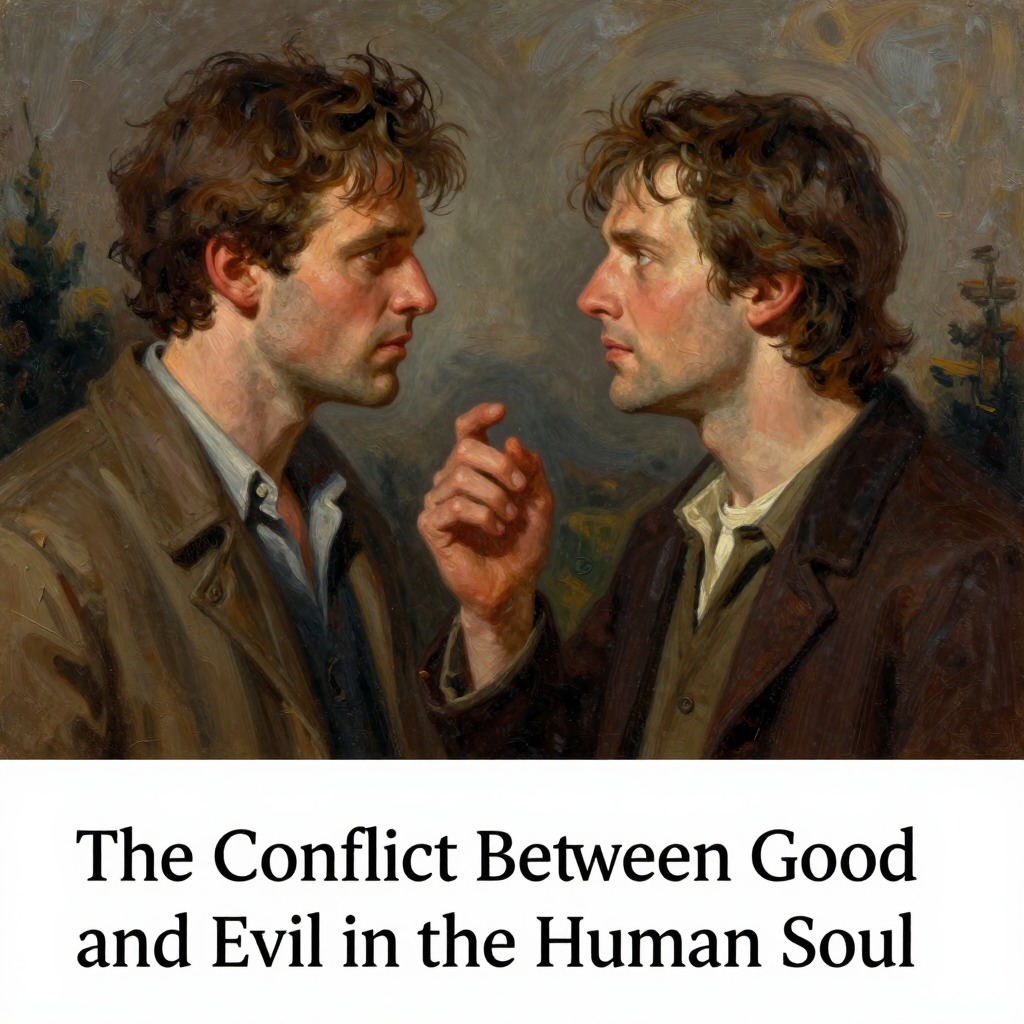
East of Eden is the novel's governing symbol, drawn from the fourth chapter of Genesis, where after Cain murders his brother Abel, the Lord sends him out to dwell in the land of Nod, on the east of Eden. In Steinbeck's hands, this ancient geography becomes not a place but a condition—the state of being exiled from innocence, marked by guilt, yet still possessing the power to choose one's own path. The phrase resonates through the book as a meditation on whether human beings are condemned by their origins or free to transcend them.
Biblical Origin and Thematic Weight
The story of Cain and Abel is read aloud by Samuel Hamilton during the naming of Adam Trask's twin sons, Caleb and Aaron. Samuel opens Liza Hamilton's worn Bible to the sixteen verses of Genesis 4 and reads the account: Cain's offering rejected, his jealous rage, the murder of his brother, and the Lord's judgment that sends him east of Eden. The narrative is stark and offers no comfort. Samuel observes that it is "a little story to have made so deep a wound." Adam, hearing it, feels an immediate shock of recognition, for he too has a brother, Charles, who once tried to kill him. The story is not ancient history but a living pattern that repeats itself in the Trask family. Lee later calls it "the symbol story of the human soul," arguing that its power comes from its universality: every person has felt rejection, and with rejection comes anger, crime, and guilt. The land east of Eden is thus the territory of every human being who has ever been refused love and has struck out in response.
Timshel: The Choice at the Heart of Eden
The most profound development of the East of Eden theme occurs when Lee reveals the results of years of study with a group of elderly Chinese scholars. Dissatisfied with the King James translation's "Thou shalt rule over him" and the American Standard's "Do thou rule over him," Lee and the scholars learned Hebrew to discover the original word. They found it was timshel—"thou mayest." This single word transforms the meaning of the entire story. It is not a promise that man will triumph over sin, nor an order that he must, but a statement that the way is open. Lee explains that this gives a man stature with the gods, for in his weakness and his filth and his murder of his brother he still has the great choice. Samuel Hamilton, hearing this, feels his life's music gain a new last melody. The land east of Eden, then, is not a place of permanent exile but a field of possibility, where every person must decide whether to rule over sin or be ruled by it.
The Monster and the Mark
Cathy Ames, whom the narrator explicitly calls a monster born without kindness or conscience, embodies the extreme of what a human can become when the capacity for choice is absent or unused. The narrator speculates that just as a child may be born without an arm, so one may be born without the potential for conscience. Cathy's life is a study in the absence of moral struggle—she feels no guilt, no love, no desire for redemption. She is, in a sense, the figure who has never left Eden because she has never known the difference between good and evil. Yet even she, in her final moments, seems to sense that she has missed something. As she prepares to die by her own hand, she recalls the childhood fantasy of Alice in Wonderland's "Drink me" bottle, which would make her shrink and disappear. But now she realizes that she has never had what others have—the capacity for love, for connection, for the choice that makes a human a human. Her suicide is the final act of a creature who could not participate in the human drama of timshel.
The Trask Family and the Recurrence of Cain
The novel traces the Cain-and-Abel pattern across two generations. Cyrus Trask loves Adam more than Charles, and Charles's jealous rage nearly kills Adam. Adam, in turn, loves Aron more than Cal, and Cal's jealous revelation of their mother's identity drives Aron to enlist and die in the war. The pattern seems inescapable, a curse passed down like a genetic trait. But the novel insists that the pattern can be broken. When Adam lies paralyzed after learning of Aron's death, Lee brings Cal to his bedside and begs Adam to give his son a blessing, to free him from the guilt that threatens to destroy him. Adam, with enormous effort, lifts his hand and whispers "Timshel!"—the word that means "thou mayest." It is his final act, a gift of choice to his son. The curse is not lifted, but the possibility of breaking it is affirmed. Cal, who has burned the money he made from war profiteering and confessed his guilt, is left not with absolution but with the open road of choice.
The Valley as Eden and Exile
The Salinas Valley itself becomes a physical embodiment of the East of Eden theme. Samuel Hamilton describes it as a place of great richness that could feed the world, yet he also feels a blackness on it, a secret violence like an old ghost haunting the dead ocean below. The valley is both Eden and Nod—a land of beauty and promise that is also a place of suffering and exile. Adam Trask, when he first arrives, plans to make a garden of his land, to create an Eden for his wife Cathy. But Cathy shoots him and abandons him, and the garden remains fallow for years. The land, like the human soul, is neither good nor evil in itself; it is what people make of it. The novel's final image is not of a restored Eden but of a son standing before his paralyzed father, receiving not a verdict but a choice. East of Eden is not a place to return to but a condition to transcend, and the means of transcendence is the exercise of the human will toward goodness, even in the face of overwhelming evidence of human depravity.